.png)
The Fall of the Landvættir and a New Hope: Iceland’s EU Referendum and the Nordic Front

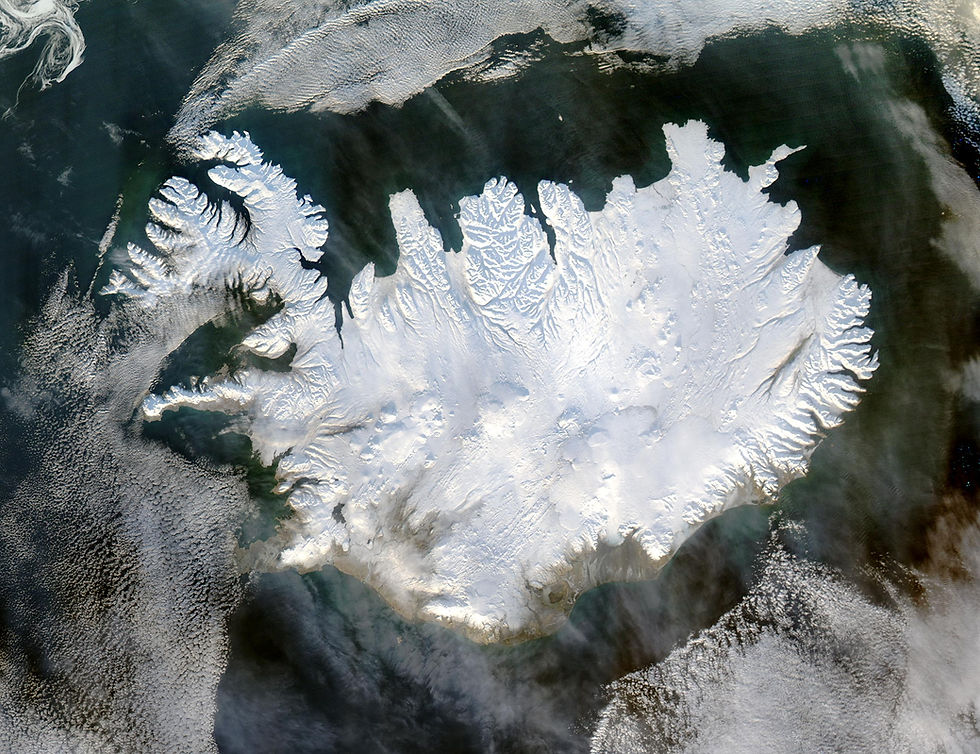
The winds of change are now sweeping across Iceland. The island has finally come to terms with the volatile nature of current geopolitics as dictated by Trump’s vulgar realpolitik, Putin’s aggressive historical-political revisionism and China’s growing forays into the international arena. In response, the Icelandic Samfylkingin government is now planning to restart EU accession talks, which have been suspended since 2013.
The process was abandoned in 2013 due to a standstill over fishing rights and accession concessions. Claiming its governing mandate was not enough to proceed without a referendum, it pulled back from negotiations and little was mentioned in Icelandic politics ever since. Nonetheless, this comfortable inertia has fundamentally changed with the new volatile era of world politics erupted by Putin’s invasion of Ukraine, Trump’s re-election and a resurgent interest in the Arctic region. The backlash has provided Europe with momentum and a valuable window of opportunity to rebuild its defence industry, revise its bureaucratic limitations, and regain trust with the most sceptical branches of its political body.
Naturally, the isolated position of the small island, which sees it sandwiched between disputes over Greenland and Russian-Chinese military drills, raises questions over its ability to protect 400.000 inhabitants from the consequences of great power politics. Furthermore, the fact that the island’s name and natural features can apparently be easily confused with its northwestern counterpart does little to alleviate Icelandic fears with the new reality of transatlantic politics.
Hence, the lure of a new European push on common defence and a new military support clause is exceptionally appetising. At any rate, the question of Icelandic fishing policy in an EU context is still the most decisive factor barring a possible accession, according to Freyja Steingrímsdóttir, executive director of the Association of Icelandic Journalists. Despite this issue, Kostas Kadis, EU commissioner for fishing, guarantees that the bloc is open to a flexible exemption deal to accommodate the most valuable potential partner yet since the disaster of Brexit. Brexit is still an active ghost shaping the referendum lexicon through the divided streets of Reykjavik. The UK Leave campaign strategies, dubious logos and its consequences have flared both sides of the barricade in their cause. Whilst the pro-EU side reminds Icelanders of the disastrous financial consequences of the UK’s decision to leave Europe, the Eurosceptics emphasise the complications Europe inflicted upon the UK through the 4 year-long negotiations.
The Íslendingar are still split on the issue. While 53% approve the restart of negotiations with the EU, only about 42-47% would approve a referendum to effectively join the union under previous fishing rights. The undecided voters will ultimately be drawn to whichever side convinces them most about the prosperity of their turned-business fishing sector and the security of the island amidst the rise of geopolitical upheaval in the Arctic region. The political revolution in the US has at heart shifted Icelandic priorities when it comes to a possible accession. The country’s once privileged economic policy and independent fishing rights have given way to a greater interest in European defence and a bloc strengthened by a new diplomatic and military impetus.
A possible Icelandic accession would redefine the success of the European project at a time when the consequences of Brexit are still very much present. It would rejuvenate a project in need of overhauling reforms in qualified majority voting, a unified EU migration Pact and enlargement at different speeds. It is invariably forcing the union to face its weaknesses and flexibly adapt to incorporate valuable new members that would otherwise be reticent to embrace the European dream.
The move could also inspire Norway to move in the same direction, as it would become the sole Scandinavian-Nordic nation outside of the European Union. The country failed its referendum vote twice in 1972 and 1994 by very close margins, revealing the country’s north-south polarisation in this matter. Anyhow, statsminister Jonas Gahr Støre recently claimed Norwegians should pay close attention to their neighbour’s referendum and consider a similar move in case Iceland succeeds in closing all chapters of its negotiation process. As all mainstream Norwegian parties are in favour of EU membership, a new push will depend entirely on the right domestic circumstances for the decisive move.
Concurrently, Albania and Montenegro are also very close to joining the bloc in what is mounting to be the first major shake-up since Croatia’s accession in 2013.
Over these 13 years, Europe has reinvented itself, faced new challenges and wrestled with the inevitability of necessary reforms. In the end, the recent transatlantic geopolitical shifts, Brexit and the Ukraine war have reshaped how Europe sees itself and its future in the international theatre. The success of this long fateful project depends on its ability to adapt to the inherently mutable nature of world politics and reform itself to better navigate the delicate interwoven tapestry of the current global order. One thing is certain: the mythical Icelandic Landvættir have yielded their defences to welcome continental integration into the land of Fire and Ice (Mayburd 2014, ‘The Hills Have Eyes’, 140).
Image: Wikimedia Commons/ NASA (Jeff Schmaltz)
Licence: public domain.
No image changes made.


Comments