
"Don't freaking let Russians travel": performative sanctions in European politics
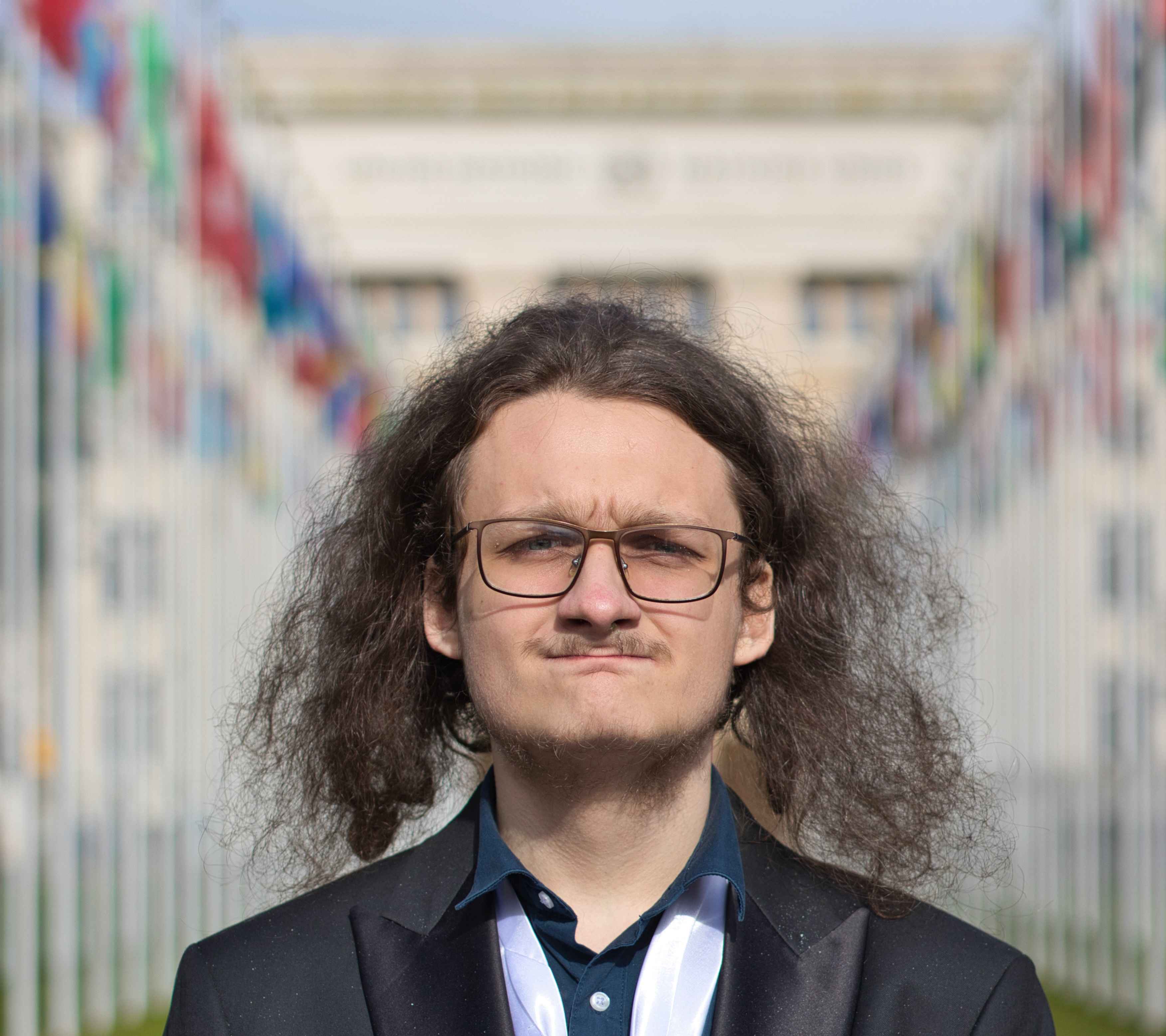

The performative male was one of the most prominent features of internet discourse last year. Armed with his matcha, his tote bag and a book of feminist literature, he aims, according to some, to present himself to women as someone who truly understands the female struggle, usually to try and enter a relationship. The key part here, of course, is the performance. The performative man may hate matcha, find tote bags impractical and not actually read feminist works, but unlike that famous idiom, we tend to judge books by their cover, and so the underlying details remain irrelevant. Whilst this is an odd outgrowth of internet discourse, it may have real parallels to European policy today.
In a recent interview with the FT, Latvian PM Andris Kulbergs argued that the EU should not "freaking let Russians travel”, arguing that, because the Russian government is currently invading Ukraine, Russians as a whole "are the aggressors". This followed comments by the Finnish Foreign Minister a week before, who also argued for a complete ban on Russian tourist visas.
It is undeniable that the Russian state, in an act of aggression, invaded Ukraine in February 2022. However, it is very reductive to reduce people to their government. If we follow that logic, what we might find is quite uncomfortable. It is now the policy of several European governments, such as the UK, that Israel is conducting an unlawful occupation and displacement of Palestinians in the West Bank through illegal settlements – thus, should the EU ban Israeli tourist visas? The UAE has been taken to the International Court of Justice over 'complicity in genocide '; thus, should the EU ban Emirati tourist visas? This example can be illustrated time and time again, because, unfortunately, states do not tend to be focused on moral purity, but this does not condemn an entire population to the actions of its government either. I'm sure it's clear to every reader that, to whatever extent you disagree with the American government, you can recognise that not every American citizen agrees with the actions of said government.
This was added to by bizarre comments last month by MEP Rihards Kols, where he argued: "...and sorry, for five years, have you seen a mass gathering of Russians, in European capitals, in front of Russian embassies?" Aside from the fact that Latvian Russian speakers protested in opposition to the war when it broke out, is a necessary condition of residency to protest? I'd wager (quite confidently) that most EU citizens have never attended a protest, or only once or twice in their life. If we again institute these standards against those who immigrate here, should we expect protests to happen regularly amongst those whose governments we disagree with, such as China or potentially even the USA? This rhetoric also completely ignores the well-documented effect of self-censorship on individuals coming from more authoritarian regimes, making it unlikely these people will protest at will.
If this political programme wasn't ironic enough, the EU removed two Russian billionaires from its sanctions list because of France and Luxembourg's vetoes on two specific individuals, Alisher Usmanov and Mikhail Fridman, respectively. Surely, these, and not ordinary citizens, are the people complicit in the killing and displacement of Ukrainian citizens? Additionally, the EU has paid Russia $209bn for energy since 2022, which has surely found its way into funding Russian weapons systems and drones. Surely the double standard couldn’t be clearer.
Some also argue that Russians on visas may be a vehicle of hybrid warfare. This might be true, but again, we tend not to ban nationals or institutions from other nations who may have interests in influencing our policy (for example, China's Confucius Institutes). Surely, rooting out potential saboteurs is an issue for European intelligence and immigration services, and not cause for banning citizens outright?
This double standard illustrates the “performative” nature of the EU's foreign policy, as it wishes to look tough on Russia, yet, when a single nation wants relaxation of sanctions, due to the EU's banal veto system, the EU gives way. Instead of punishing those involved in this war, instead of restricting financial flows to the Russian government, the EU seems keener to punish ordinary people, as that's far easier – ordinary people often can't hire dozens of lawyers, after all.
This is especially absurd considering many Russians have fled the country in successive cycles, with a recent housing rush in Georgia, Serbia and Armenia linked to this phenomenon. In fact, Russians who flee war, or travel for tourism, don't really travel to the EU, which doesn't feature in the ten most travelled-to destinations for Russians. Additionally, considering that at least some Russians have fled, the EU would surely be poised to take advantage of 'brain drain' and harness their talents to the benefit of Europe. If the EU wants to punish Russia economically for its war of aggression in Ukraine, why not demonstrate that using its own citizens against them? It certainly seems that a much saner policy would be to punish those responsible and harness those fleeing for our benefit. Back in the Cold War, the Western bloc demonstrated itself not by building walls or blocking others out, but by creating an open society. We should actually punish clear violations of international law and not merely perform.
Image: Wikimedia Commons/www.kremlin.ru.
No image changes made.


Comments