.png)
Trump's National Security Strategy - Avarice and Malice at Christmas

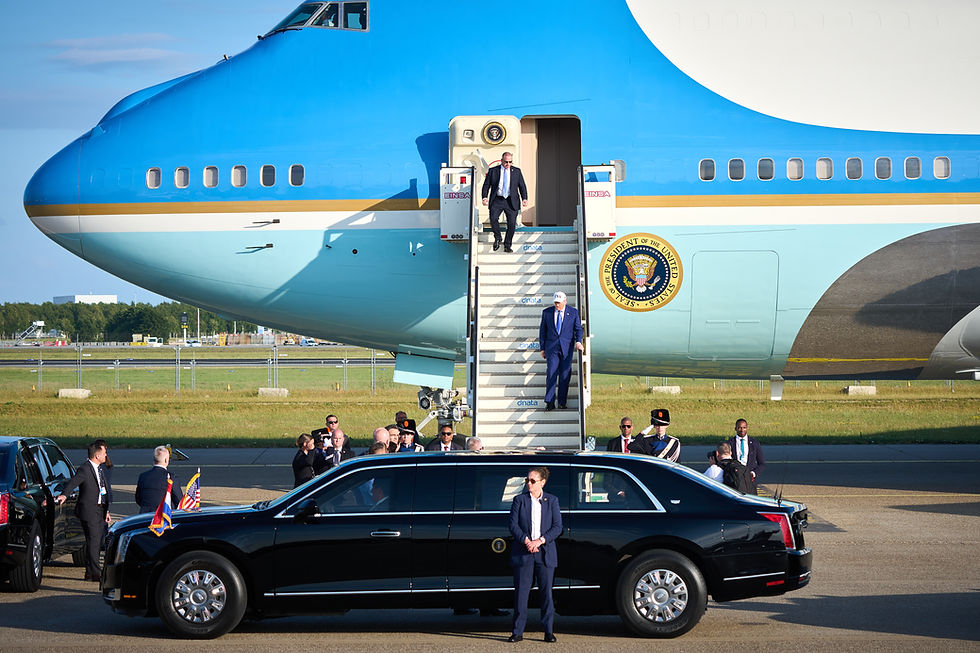
On the 5th of December Donald Trump’s second National Security strategy was released to little fanfare, nevertheless precipitating great global alarm, not least in Europe, as it appears to promote an archaic vision of a world once again carved up for consumption by superpowers.
This National Security Strategy is very streamlined, at only 29 pages, compared to Trump’s 55-page 2017 equivalent. It even describes these old strategies as ‘bloated and unfocused.’ This reflects a new vision of America’s dominance cultivated by the Trump Administration. Out are ‘global burdens’ such as USAID ‘to which the American people saw no connection to the national interest,’ in is a foreign policy unlike any other in postwar American history. The Western Hemisphere (the Americas) have in the past been as low as fifth priority among global regions, this time, it ranks first. This helps understand what Trump means by ‘America First.’ Trump does not want America to be the world’s babysitter, rather he wants America to be as strong as possible domestically, which, according to this document, requires some foreign intervention. The document asserts that any ‘non-hemispheric competitors’ should essentially play no role in Latin America. The administration plans to bring closer its growing band of political friends in South America, such as Javier Milei in Argentina, and Nayib Bukele in El Salvador, and ‘expand by cultivating and strengthening new partners while bolstering our own nation’s appeal.’ The USA’s political influence over Latin America has always been pervasive, but clearly this administration plans to intervene even further in Latin American politics, and use its power to cultivate new far-right leaders in the hemisphere. This plan is already taking shape, with pro-Pinochet Jose Antonio Kast coming to power this month in Chile, ending a decades-long left-wing political tradition. This intervention is seen as useful for the US, as it can help reduce migration and potentially bring cheap oil to the US, should President Trump continue to test the waters in Venezuela, all of which purportedly will help the US remain strong domestically. While most National Security Strategies have focussed on traditional enemies such as China and North Korea (not even mentioned once), this one focuses on normalisation of relations with such nations, and expanding the far-right sphere of influence, including into Europe.
The section on Europe is entitled ‘Promoting European Greatness.’ Much of this section is dedicated to lambasting Europe’s apparent weakness and warning of ‘civilisational erasure’ due to migration policies which in many countries are the strictest they have been since the end of the Second World War. Highlighting that Europe’s share of global GDP has shrunk since 1990, it is apparent that the US does not see Europe as a superpower, with the real superpower in the region being Russia. It is clear that the administration’s main goal in Europe is to normalise its relationship with Russia and in doing so stop NATO’s expansion. US businesses will benefit enormously from normal relations with Russia, and therefore Trump wants to bring Europe closer together with Russia, as this would benefit both Russian and US business, leaving Europe as the meat in a geopolitically awkward sandwich. Trump’s plan to do so is very similar to his plan in Latin America, to bolster its allies - the populist right whose ‘growing influence…indeed gives cause for great optimism.’ Direct American interference in European democracy is rarely so overt, such brazenness shows where Trump’s priorities lie, he is ready to use the US’s considerable power to sell Europe off to the populist right to benefit US and Russian businesses. The document also makes apparent that Trump is very sceptical of the EU, as it supposedly undermines the sovereignty of individual nations. Eurosceptic governments in Europe will bolster trade with both the US and Russia, so it is little wonder that in a leaked draft of the document, it is said that the US should lure Italy, Austria, Hungary and Poland from the EU, a fundamental attack on European unity. This strategy brazenly seeks to undermine European democracy and unity and bring Europe closer to both Russia and the US, merely to benefit US businesses. Clearly, Trump sees Europe as a playground for its surrounding superpowers.
This National Security Strategy outlines a frightening new vision of the world. The strategy largely ignores China and stresses the importance of normalising relations with Russia while expanding the US sphere of influence. This is a return to a heartless world of superpower might making right. European and Latin American autonomy is disregarded in favour of US business interests, interests which do not involve disturbing other superpowers such as Russia, China, and India. They presume to leave Europe at the whim of Trump and Putin. This National Security Strategy appears an existential threat to European democracy and puts into writing what we already suspected, that Trump does not have Europe’s back, and is a threat to the entire world order.
Image: Flickr/Ministerie van Buitenlandse Zaken (Phil Nijhuis)
No image changes made


Comments