.png)
Rethinking Carcerality and Mens Rea – A Review of Borgli's The Drama

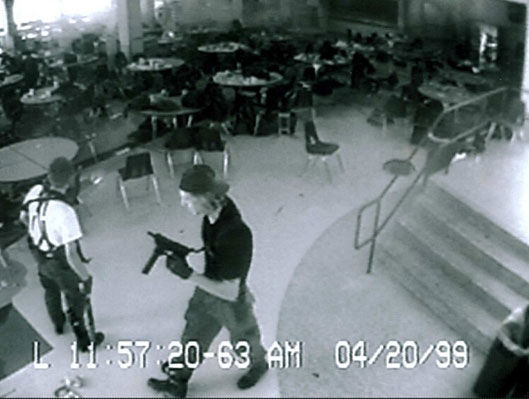
Mens Rea dominates our perception of juridicality. Best demonstrated by the rise of true crime media, the grisliest cases arise a morbid curiosity in the spectator. Why did they do it? We can delineate the ensuing response into two categories: impulse and calculation. The former leads to a lesser punishment socially and juridically, with the crime being dismissed as the passions overcoming an otherwise just subject. It wasn’t them, it was the moment. Inverting the above formula is calculation. In this perception, the subject has an evil, psychopathic essence, and, despite their appearances, they are ontologically unable to be just.
The above distinction runs through the history of legal philosophy. In Plato’s Laws, he makes this distinction alongside one between “incurables” and “curables” in the polity. The law must differentiate between those whom the polity can reform into participating citizens and those who must be exiled or killed because they are irreconcilable with other citizens.
Kristoffer Borgli’s The Drama presents a situation that unsettles how we usually understand the above distinction. The beginning of the film plays out as a conventional romantic comedy, presenting an engaged couple, Emma and Charlie, preparing for their wedding. During a dinner tasting, the protagonist, Emma, discloses that she planned a school shooting when she was a teenager but ultimately did not carry it out.
The film brackets justice’s intuitive connection to the relevant malevolent action. For instance, if we think of someone stealing a candy bar, part of our conception of justice is addressing the harm the theft caused. If Emma did shoot the school, it would be simple to move from the gravity of her action, and the pain it caused, to her being incurably evil. Our current model of carceral justice implicitly collapses the crime’s severity with the subject’s incurability. Due to the harm they caused, most people’s sense of justice would demand expelling the shooter from society permanently, sending them to prison for the rest of their lives. In the film, we see how the first reactions from the maid of honor and best man, Rachel and Mike, were to incarcerate Emma. However, when it becomes evident that carceral punishment is unavailable because no harm has been caused, we see the characters grapple with what to do.
One of the first responses we get is from Rachel. When hearing Emma’s plan, Rachel vituperatively attacks her for being so close to inflicting such an atrocious act and instantly extirpates any kind of future relation with her. For Rachel, Emma’s capacity to do such violence removes her from humanity, abjecting her to being the monstrous, incurable ‘psycopath.’
Charlie defers Rachel’s characterization by seeking some psychological rationalization. He pleads for her to explain why she planned the shooting. Though mens rea was evident, childhood trauma could absolve her state of mind as accidental, with a pure underlying substantive subject oppressed by some external force. He asks about a story he heard when Emma was younger about one of her classmates being in a car accident. Despite Emma denying this as a serious moment in her childhood, Charlie quickly creates a fantasy of Emma seeing the violence of the event, with her violent thoughts becoming an accidental byproduct of trauma and not an indictment on who she ‘really is.’
The problem with this definition of mens rea is its individualized nature. Both of these concepts presuppose the liberal proposition that the individual is defined against the space they occupy, subordinating their accidental traits to a supposed individual essence. The movie shows, in brutal detail, the limits of this definition.
When asked about the reasons behind the shooting, Emma’s initial response was about the loneliness she felt as a child. We see images of Emma bullied and ignored, with her adopting the edgy aesthetics of school shooters to finally be recognized. If society has cast her as a dreg, she would be able to prove in the most dramatic fashion that she isn’t. Here Borgli plays with the Robinson Crusoe narrative; instead of seeing how socially isolating an individual displays what humanity really is, we see how such loneliness breaks what makes us human – community.
Community rescues Emma from her cycles of violent despair. After her shooting was interrupted by a mall shooting that same day, her classmate, unaware of Emma’s plans, asks her to participate as an activist for gun reform. Emboldened by the healthy recognition of others in a community and taking part in an important cause, Emma becomes a confident dissident prepared to fight for justice. In his wedding speech, her father selects these moments as constitutive of ‘who she really is.’
When hearing her father laud her accomplishments, Rachel laughs at the perceived hypocrisy of her being capable of shooting up a school yet being an outspoken activist, believing it is further proof of Emma’s incurable psychopathy. The convenience of Rachel’s dismissal is that it externalizes her from the ugly action. The black and white world of the essential mens rea, a juvenile picture of there being ‘good’ vs ‘bad’ guys, is comforting. If Emma’s mens rea was socially produced, then Rachel would have to reflect on her role in social structures, on what she is helping to cultivate in society. Instead, placing it solely on Emma frees her from such a responsibility, allowing her to take refuge in a convenient Manichaean world.
The film proffers this outlook through Emma. In the first scene, we see the camera turning between Charlie staring at Emma and details about her, situating ourselves inside his mind as it devises a plan on how to approach her. Seeing her sitting alone and reading a book, he rushes over to her seat to slyly look up the book she is reading on Goodreads. Soliloquizing his prepared speech, he becomes embarrassed at the lack of a response. Emma, due to having a deaf ear, sees him apologizing and warmly asks him to do it over. Throughout the film, Emma repeats the mantra of new beginnings, emphasizing that people are not condemned to their past and have the ability to do things over.
In the last scene, right after the wedding, we see Charlie sitting alone in a diner, battered with blood spread across his clothes. Due to ruining the wedding by admitting his infidelity during a manic breakdown, he sits alone, completely removed from any community. Before the wedding, they agreed to make a newlywed rendezvous at the location, but, due to the severity of Charlie’s actions, it seems unlikely that Emma will make it. Hearing the ding of the doorbell, Emma comes in with a puffer jacket over her wedding dress and sits across from him. In the final lines of the film, she repeats the first scene by reaching her hand out to introduce herself. In a wide shot with both of them parallel to one another, both as sinners, they awkwardly shake hands.
However, something incomplete remains with Emma’s vision. Following the wide shot, the final two shots of the movie are portrait shots of the two characters. Charlie tries to express that the new beginning is not possible, yet he restrains his words. Emma feigns a smile to hold back her tears. Both visibly struggle with their performance of fully absolving the other in the new beginning, with the past haunting their reconciliation.
On the one hand, her message seems emancipatory, emphasizing the active nature of us defining ourselves against our past. However, as the film’s tragic ending indicates, true recognition is only possible with the totality of our being. The possibilities of who we can become still rely on who we have been and who we are. Beginnings are never pure; that is, they must take off on ground that has been. Emma’s yearning to begin anew ultimately abdicates responsibility for the past, shirking from herself rather than affirming.
Responsibility does not necessitate carcerality. Lacking from the final scene was an openness from both of them to radically accept the other for who they were and could be. Additionally absent was community; it was not one person that helped transform Emma earlier in her life but the work of many. True change comes from building communities centered on care that can affirm people’s past and possibilities.
Image: Wikimedia Commons/Columbine High School
Licence: public domain
No image changes made.


Comments