.png)
Moldova Unplugged from Russia: The Rise of a Resilient Energy System
Updated: Jan 4

The Republic of Moldova, a small country situated between the EU and Russia, has long been vulnerable because of its heavy reliance on Russian-controlled energy infrastructure. The war in Ukraine and the 2025 Russian gas cutoff exposed this serious vulnerability. Responding to these challenges, the pro-EU Moldovan government has taken strong measures towards energy diversification and integration into the EU energy system. This article examines how Moldova is reducing its reliance on Russia and building a more resilient and sustainable energy system.
PART I: Historical Dependence on Russian Energy and Geopolitical Leverage
Historically, Moldova was overly reliant on Russian gas, which would mainly flow through the Ukrainian Rozdilna-Izmail gas pipeline. The reason for this dependency is Moldova’s dearth of domestic gas reserves, leaving it heavily reliant on imported electricity.
Since the start of the Russo-Ukrainian war, which began on 14 February 2022, almost 100% of the energy that Moldova needed to function depended on Russian gas funnelled through the Transnistrian-controlled Cuciurgan power station, also known as MGRES Cuciurgan. This power plant used to be Moldova’s primary energy producer, accounting for 80-90% of consumption.
In 2004, the unrecognised Transnistrian authorities privatised the Cuciurgan power plant. However, the plant legally belongs to the Republic of Moldova, as its constitutional authorities, even to this day, do not recognise the privatisation that occurred in 2004.
Moreover, the Transnistrian separatist regime based in Tiraspol illegally “sold” the power plant to a joint-stock company known as Inter RAO UES, headquartered in Moscow, Russia. The majority stake of 51% was “bought” directly from the separatist regime in 2005, while the remaining stake of 49% was acquired in 2008 from a Hungarian-based natural gas trading company known as Emfesz Kft for around $163 million. This company was involved in a significant scandal in April 2009, when its CEO fraudulently sold the company for $1 to a Swiss shell company known as RosGas AG (allegedly tied to Gazprom), a company that has repeatedly lost out on billions of dollars through non-transparent procurement practices and insider deals connected to the political elites of the Russian Federation.
Since the separatist Tiraspol regime is heavily tied to Russia, the illegal “privatisation” of MGRES Cuciurgan power plant can be seen as part of Russia’s attempt to maintain a tight grip on the constitutional authorities of Moldova by creating a cycle of energy dependence, through which they can steer Moldova’s geopolitical orientation. For example, Gazprom has historically owned a controlling 50% + 1 stake in Moldova’s state gas company, Moldovagaz, a structure that long allowed it to exercise decisive influence over Moldova’s gas sector, even though this ownership has not translated into effective operational control since 2025. Moreover, Russia historically supplied gas for free to the Transnistrian region.
However, Gazprom claimed a debt of more than $700 million in 2022, even though an international audit conducted by two renowned international companies, Wikborg Rein from Norway and Forensic Risk Alliance from the United Kingdom, concluded that the actual debt amounted to only $8.6 million. The audit report concluded that from the sum asked by Gazprom, around $276 million lacked supporting documents, and another $400million was considered to be unenforceable, as the arbitration decisions had been overdue under both Moldovan and Russian legislation. These arbitration decisions were rendered in 2009-2020 and could no longer be enforced after three years. Moreover, it was concluded that since 2007, Gazprom itself failed to pay around $160million in gas transit fees to Moldova.
In 2025, an energy crisis occurred as the breakaway region of Transnistria stopped receiving natural gas supplies on 1 January 2025. Officially because the five-year transit deal with Ukraine expired, even though Gazprom and Moldovagaz signed a gas supply contract that was supposed to remain valid until October 2026. Analysts argue that the decision to cut off the supply of gas was politically motivated. Firstly, with the 2024 Presidential elections being won by pro-EU Maia Sandu, the Russian government may have realised that its tight grip on Moldova is coming to an end. Moreover, parliamentary elections occurred in 2025, so it is entirely possible that the Russian Federation cut off the supply of gas to Transnistria ahead of the elections, to encourage the Moldovan population to vote for Russian-backed candidates who promised that the supply of gas from Russia would be resumed at a cost lower than the market price.
It is important to note that although the Ukrainian government refused to renew the transition agreement for Russian gas, Gazprom still has a contractual obligation to deliver gas until October 2026. The alternative route that they should have used is the Trans-Balkan pipeline via TurkStream. Under this route, gas would flow from Russia, under the Black Sea via Bulgaria, into Romania, and then into Moldova. However, Gazprom made no capacity bookings for this route since it cut off the gas supply coming from Ukraine. According to analysts, this was a deliberate attempt to artificially create an energy crisis and thus destabilise Moldova.
Nevertheless, since a new pro-European government came to lead Moldova the country has embarked on a strategic path to drastically reduce its energy dependence on Russia, particularly towards the Russia-controlled Cuciurgan plant and Gazprom. This path aligns with the country’s ambitious European path, which has been confirmed multiple times by the vast majority of the population through past election cycles. It is certain that Moldova’s population wants a change from the Russian-controlled past, which explains the country’s efforts to diversify and develop its energy sector.
PART II: The Major Strategic Infrastructure Projects Strengthening Moldova’s Energy Resilience
Moldova started to work on its energy resilience by investing in the 400 kV Vulcănești-Chișinău high-voltage overhead power line, a project designed to eliminate Moldova’s vulnerability to the Cuciurgan power plant, which is controlled by non-state actors, as aforementioned. The line stretches over 150 kilometres, crosses eight districts, and is estimated to transport around 65% of the electricity that Moldova currently consumes. This strategic investment was financed by the World Bank, with a total estimated cost of around $70 million. Two credits came from the International Development Association (IDA), with IDA-63800 crediting $55 million and IDA-63810 crediting $15million. Both these credits were signed in September 2019, and they came into effect on 24 March 2020. These two represent IDA credits, also known as concessional loan financing, meaning the financing must be repaid at some point, but at very low interest rates and with very long repayment periods. It is also worth mentioning that the Moldovan authorities have no direct contribution to the project.
Out of the $55 million, around $29 million was intended for the construction of the overhead line itself, and the remaining $36 million would go towards the modernisation and upgrades of the Chișinău and Vulcănești substations. For the Chișinău substation, the purpose of the modernisation is to increase the capacity and operational flexibility of the powerline to accommodate 330kV technology. For the Vulcănești substation, an extension to accommodate 400kV equipment for the high-voltage line will be done, which would enable Moldova to diversify energy sources and reduce dependency on a single supplier.
Another project that would contribute to the energy resilience of Moldova is the construction of the 400kV Balti-Suceava power line, which is supported by the European Bank for Reconstruction and Development (EBRD) and implemented by Moldelectrica. The estimated costs for the project amount to almost $84 million, out of which $33.5 million represents an EBRD/EU grant, $16.7 million represents an EBRD loan, and the rest represents a contribution made by the European Investment Bank (EIB). The length of the line is around 142km, and the construction for the line is supposed to begin next year, with the project estimated to be completed by 2027.
Finally, Moldova also plans to start the construction of the Straseni-Gutinas 400kV transmission line in 2025, with the full cost of the project being covered by a $130 million grant offered by the United States. The idea is to again diversify the energy sources of Moldova and to enhance energy security. The project is supposed to be finished by 2029. It is important to note that the Vulcănești-Chișinău line is almost finished.
Overall, the three power lines can independently transport around 65% of the electricity needed for Moldova to function; however, it is crucial for the energy security of the country, as power systems must avoid single points of failure. Relying on only one line could lead to widespread blackouts if the line fails for any reason, so three lines would ensure resilience and flexibility.
PART III: Diversification Beyond Infrastructure, Investment in Renewables, Efficiency and International Cooperation
Beyond these grand, state-wide projects, there have been many more initiatives demonstrating this new strategic direction. For instance, Moldova has inter alia actively supported renewable energy development, and encouraged energy efficiency at the household level. A key measure has been the subsidisation of insulation materials for residential buildings. This program aims to improve electricity consumption efficiency across the country, reducing the overall demand for imported gas and electricity.
In addition to domestic initiatives, Moldova is strategically positioned within the vertical corridor for regional gas projects. Notably, the United States signed an agreement with Greece to construct a liquefied natural gas terminal in Alexandroupolis, which could supply Moldova and other neighbouring states with alternative gas sources. This diversification is critical, given Moldova’s lack of domestic gas storage infrastructure. Currently, Moldova relies on storage facilities in Romania and Ukraine. However, storing gas in Ukraine is increasingly risky due to Russian attacks on pumping stations and storage facilities. At present, Moldova can supply gas to its population for around 15 days in case of disruption, with plans to expand this capacity to 30 days.
Alternatively, Moldova is also exploring nuclear energy cooperation with Romania. The Moldovan Government has expressed interest in investing in the fourth reactor at the Cernavoda nuclear plant, which is not yet operational. Once completed, this project will certainly become a significant energy source for the European Union, thus offering Moldova a reliable low-carbon option and further solidifying its integration into EU energy networks.
Moldova also has a unique opportunity of becoming an energy hub in the region, maybe even a key electricity exporter to its eastern neighbour. To be exact, southeastern Ukraine has very limited production and Moldova has already supplied renewable energy to its neighbour. This shows a great opportunity for Moldova’s economy, it could attract investment, create green jobs and strengthen its geopolitical position. This way, Moldova can not only boost domestic economic growth but also enhance regional energy security, positioning itself as a reliable and strategic partner in Eastern Europe’s energy transition.
PART IV: Green Transformation and Moldova’s Bright Future
The progress achieved in Moldova’s green energy sector has been nothing short of remarkable. The country now has an installed renewable energy production of 521 MW, eleven times higher than in the year 2019. In the year 2025, the installed capacity for renewable energy production has increased by over 55% compared to the previous one, with the greatest progress recorded in the field of photovoltaic electricity. A clear example of this growth can be seen in April, when 36% of the country’s total electricity consumption was covered by locally produced renewable sources.
This represents an all-time record and a significant increase from March, when the share of locally produced green energy was approximately 23%. However, the biggest highlight of all was the day of Thursday, August 23, when Moldova reached a historic milestone regarding green energy production. That day, the country's electricity consumption was entirely 100% covered by local energy production from renewable sources.
Over the past 18 months, the government auctioned 165MW at fixed prices (105MW from wind and 60MW from solar), aiming to stimulate renewable energy production. Over the next three years, an additional 180 MW will be offered through similar auctions, further expanding the country’s clean energy portfolio. As for hydroelectric energy, Moldova has some old facilities, such as those on the Prut and Nistru rivers. Unfortunately, they produce a very limited amount of power, around 10-15MW. The low water flow and high repair costs make large-scale investment in hydroelectricity less viable.
Energy security has also been a central national priority. It entails maintaining a reliable and sustainable supply of electricity, natural gas, petroleum products, and other energy sources. This objective is ensuring uninterrupted access to energy resources, as well as operating and developing the necessary infrastructure and production capacity to use these resources efficiently. In order to safeguard energy security, the Ministry of Energy has implemented a series of measures that proved essential in stabilising the country during last winter, when Russia unlawfully cut electricity and gas supplies to the breakaway region of Transnistria. It is important to highlight that all territories under the control of the Moldovan government remained fully protected from these disruptions. Moreover, since the beginning of the Russia–Ukraine war, Moldova has not experienced any large-scale electricity or gas outages, demonstrating that national energy security has been effectively maintained.
Moldova also partnered with the United States on energy storage initiatives, including an initial 80MW lithium battery project. These storage solutions are critical for balancing the supply of renewable sources and enhancing grid resilience. Combined, these measures illustrate Moldova’s comprehensive approach to energy independence: diversifying supply, promoting renewables, improving efficiency, and integrating within European networks.
CONCLUSION
The energy reforms and developments in the years 2021–2025 mark one of the most transformative periods in Moldova’s modern history. For the first time since its independence, Moldova is no longer reliant on Russian gas and electricity. This shift is making way for a new future, one that is based on sustainability, energy efficiency, and security, a future that could strengthen Moldova’s geopolitical position and economic growth.
As these diversification measures mature, Moldova is increasingly positioned to establish a more predictable investment climate and accelerate its integration into European energy markets, whilst becoming better able to withstand external supply shocks. Ultimately, these measures serve to reinforce Moldova’s national resilience and long-term economic opportunities.
Researchers: Paul Recean, Will Kingston-Cox, and Alexandru Cojocar
Editor: Argia Servaes
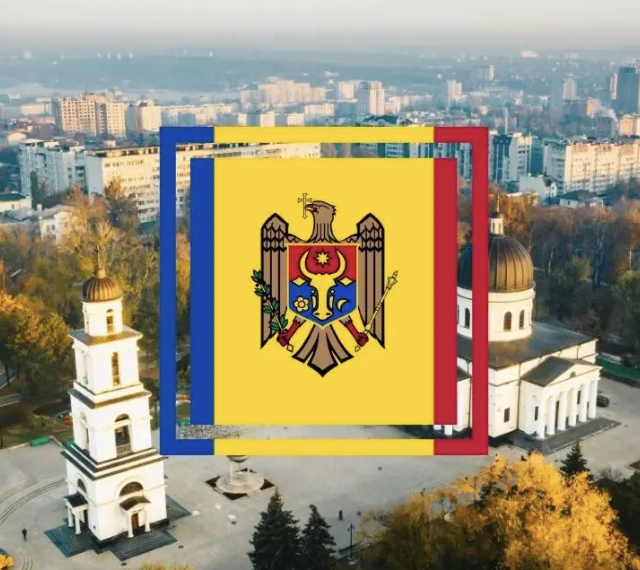
Image: Guvernul Republicii Moldova/Government of the Republic of Moldova
No image changes made.


Comments