.png)
Criminality and Policing in Spider-Man: Brand New Day - A Left Structuralist Critique

While I would not consider myself a fan of the Marvel Cinematic Universe (MCU), the trailers and sneak peeks that had been released to promote Spider-Man: Brand New Day had got me fairly excited to watch Tom Holland’s newest outing as the beloved friendly neighbourhood spidey. I have always been most interested in ‘street-level’ heroes, a term used to describe characters like Daredevil or Black Widow who feel more at home fighting bands of goons in a dark alley than literal gods in space. This is not to say that watching Superman lift an entire building is not awesome, but, ironically, I find the stakes to be higher and more compelling at the smaller scale. In the hands of a talented team of writers, such street level narratives can make for excellent neo-noir thrillers. Also, I find the fight choreography tends to be more intricate and thoughtful, and by extension cooler, when both characters cannot blow a building to smithereens with the flick of their wrist.
This is all to say that when it was announced that Spider-Man: Brand New Day would feature Spider-Man fighting street-level villains by himself while living in a less-than-glamorous loft apartment without the help of the Avengers, I was excited. Having now watched the movie, I can say that it just about matched my expectations for how gritty and grounded a post-Endgame MCU IP could get. This was never going to be Matt Reeves’ The Batman after all. The emotional conflict of the film was not developed much beyond what appeared in the trailers, and its climax was disappointingly banal. These general weaknesses aside, however, I found the film fascinating for its ambiguous portrayal of crime, the people who commit it, and those tasked with ‘fighting’ it.
Around the beginning of the movie, when the audience is shown what Peter Parker has been up to in the time between the end of the last movie and the start of this one, we are told that Parker’s efficiency at beating up bad guys has resulted in crime rates falling to an all-time low. This is announced by a newscaster in a serious yet positive tone over a montage of Spider-Man defeating a variety of individuals in colourful outfits, along with the observation that the entire city, it seems, has adopted the superhero as its unofficial mascot and most-loved resident. While this makes for an interesting parallel between Spider-Man’s successes and Peter Parker’s growing isolation, a central theme in the movie and other Spider-Man media, it immediately raises questions regarding the composition of NYC’s crime figures.
The montage the audience is shown only portrays Spider-Man defeating a variety of recognisable comic-book supervillains, but compared to the amount of crime committed in NYC on an annual basis, these victories are unlikely to contribute to lowering crime levels overall. Even in the Marvel Universe, the ratio of people without powers to people with powers is stark. Yet, the film is adamant that crime levels have fallen since Spider-Man started taking out the bad guys. One could imagine that the mere presence of Spider-Man on the streets of New York would deter criminals from acting out as they otherwise would have, but this is still not a convincing explanation for Spider-Man’s impact on lowering crime to this extent. What is more likely is that the film is suggesting that all it takes for crime levels to fall in a particular locality is an increased presence of agents to enforce the law and put people in jail. Therefore, crime levels have fallen because Spider-Man has taken it upon himself to round up the criminals that the police were too overstretched to arrest.
One look at the literature on criminality and policing, however, quickly disproves this often-repeated belief. Increased police presence in ‘hotspot’ areas may work to grow the incarcerated population, but this is an altogether different result than reducing crime rates in a sustainable manner. Often, this approach only exacerbates social and economic inequalities between communities, as the justice system in many countries by its very nature targets poorer communities and exacerbates a vicious cycle of imprisonment, social instability, economic deprivation, and recidivism. Given the history of the United States’ criminal justice system harking back to Jim Crow strategies of penal slavery and arbitrary imprisonment, the racial dimension is unavoidable in Spider-Man: Brand New Day’s setting; the city with the largest black population in the United States. Instead, welfare and crime prevention programmes have repeatedly been shown to reduce crime in the long term, by granting people a level of material security which reduces the likelihood of them becoming homeless, developing mental health issues, and/or engaging in theft or drug use, all leading causes of incarceration.
The reality of criminality and its causes thus puts the writing team for a film like Spider-Man: Brand New Day in a bind. Of course, they did not have to explicitly state that Spider-Man lowered crime rates substantially in New York, but throughout the film we see Peter maintain a close relationship with the NYPD police chief, played by The Bear’s Liza Colón-Zayas, acting essentially as a suped-up cop. When Spider-Man is not beating up one of his many arch-nemeses, the writers try their hardest to humanise and justify his crimefighting by having him take down bank robbers, people who snatch purses from old ladies, or bike thieves. In other words, Spider-Man solves crimes that are either inane, too outlandish to be considered believable, or clear-cut enough for him to preserve his moral high-ground. It would paint a far different impression of our favourite neighbourhood Spider-Man if he was shown wrestling a mentally ill black man into the back of a police car. On the other hand, having Spider-Man work shifts at the soup kitchen to help the local homeless population for 2 hours wouldn’t exactly make for an enthralling blockbuster.
Interestingly, a similar critique to the one I am putting forward here is levelled fairly regularly at another well-known comic-book character; Batman, who has been snidely characterised by some writers as a “billionaire aristocrat who beats up poor people”. While this take is controversial, the comic book fandom is at least in part aware of the structural critique that can be made of superheroes and their role in exacerbating the criminal justice system’s discrimination. Along these lines, Spider-Man’s character is interesting to analyse.
In almost all of his appearances in popular media, Peter Parker is poor and living in Queens, a borough with pockets of high economic deprivation, and is thus often associated with racialised and marginalised individuals from that background. Indeed, Jamie Foxx’s character Electro openly admits that he thought Spider-Man would be black under the mask in Spider-Man: No Way Home (2021). It is perhaps even more egregious that Spider-Man dedicates his life to widening the economic and social inequalities affecting the people he surrounds himself with and speaks to on a daily basis. The same critique could be levelled at Miles Morales’s Spider-Man as his movies work just as hard to valorise the work of the police by having his father be in the force and stress the continuous danger he is in, a depiction of police work which is largely incongruent with the reality of the job.
If instead of spending his time implicitly beating up poor and mentally-ill people on the streets of NYC to create the false impression of lowering crime rates, Spidey used his powers to pressure politicians and police-chiefs to implement welfare support programmes or punish racist cops in an effort to lower crime rates and preserve social cohesion, he would be much more efficient in achieving his stated goals. The problem is, he would most likely be framed as the villain of the story if he did so, much like the Black Panthers were demonised in the 1960s and 70s for daring to call out police brutality and feed hungry children so they would be better prepared to learn at school.
Here is where it is important to talk about the second half of Spider-Man: Brand New Day and its ambivalent attempt to tackle this very question. About halfway through the film’s runtime, it is revealed that the individual who has been terrorising Spider-Man and his close ones is Jean Grey, a psychic mutant and one of the most powerful members of the X-Men. Despite the irredeemable things Gray does throughout the film, it is revealed towards the end that she and her sister were both victims of the United States Department of Damage Control, a federal executive department responsible for dealing with enhanced conflicts. Specifically, Gray’s sister was kidnapped by Damage Control and subjected to tortuous experiments which ended her life, a fate Gray herself almost befell in Brand New Day. As a result of this revelation, the audience is expected to sympathise with Gray, as Peter does, and direct their animosity against William Metzger, the director of Damage Control played by Severance’s Tramell Tillman.
On its face, this appears to be quite a subversive and self-aware decision on the part of the writing team. Spider-Man is made to confront his prejudices regarding the criminals he attempts to lock up, and is shown first hand the damage caused by corrupt institutions against marginalised groups, in this case mutants. Unfortunately, the metaphor stops there. Once Metzger is defeated and Damage Control supposedly reformed, the film does not ask how they were allowed to commit such atrocities on children, or what other organisations were involved. The film also implicitly suggests that all it takes to reform corrupt institutions is to replace the figurehead, as opposed to analysing and questioning why those institutions came about in the first place, and the impact of their organisation, goals, and methods used for achieving those goals on the broader society. Furthermore, the film ends with Spider-Man going back to working closely with the NYPD, despite the organisation’s long history with pre-emptive policing and harassment of marginalised communities, an ironic twist given this was essentially what the film condemns Damage Control for doing to Jean Gray. As a result, the film serves to valorise the institutions and practices responsible for many of the racial and social inequalities present in our society today.
For many reasons, this is not surprising. Disney is a multinational corporation not exactly known for its commitment to progressive causes, and it is illogical to expect such an organisation to green-light a scathing critique of American policing for arguably its only remaining popular MCU-related IP. Admittedly, it would also likely make for a horrible film. How does a superhero even fight an institution they cannot see or touch while exploring the socioeconomic harms it produces in a way that does not diminish them? Although perhaps I am being too charitable. How hard would it be to show Spider-Man using his super-strength and speed to build and stock homeless shelters? Perhaps the central takeaway from this article, however, is the realisation that no matter how strong someone is, or how fast they can run, or how heightened their senses are, society’s problems are likely to outlast the hero if the diagnosis is wrong. Conversely, it may take superhero movies to remind us that you don’t need superpowers to change the world for the better; a team of well-intentioned, informed, and motivated people with enough resources can ‘fight’ the conditions which produce crime, and defeat them, with the added benefit of leaving the city’s skyscrapers intact.
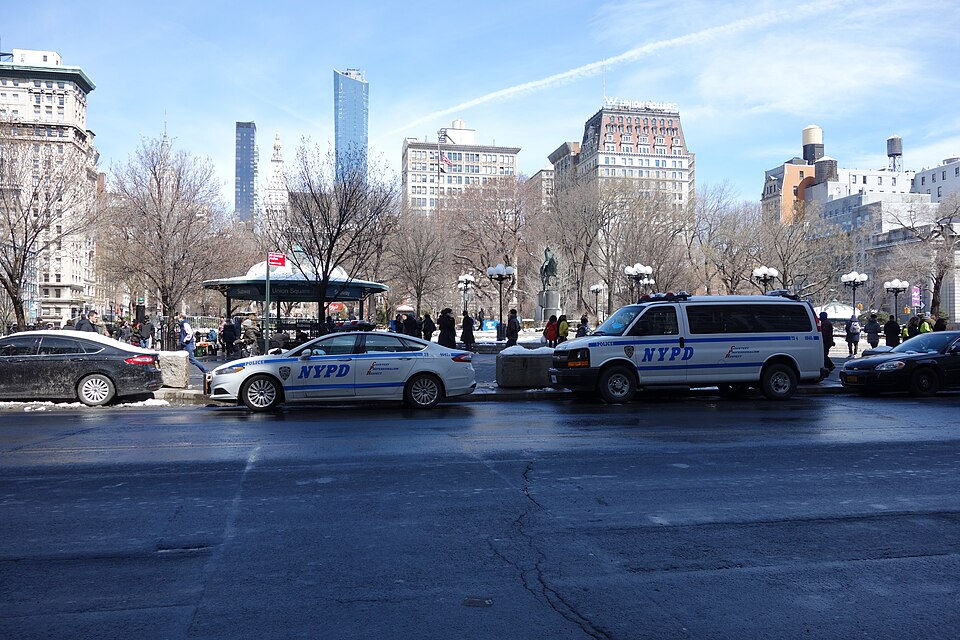
Image: Wikimedia Commons/Tdorante10
No image changes made.


Comments