.png)
`Beware ‘Nostalgia’: Boards of Canada, Burial, Benjamin


Boards of Canada, a Scottish electronic music duo, are soon to release their first LP in 13 years. ‘Inferno’, will be available through Warp Records and conventional streaming from the 29th of May. The duo released their first full length LP, ‘Music Has the Right to Children’, in 1997, an album which has since been described by Simon Reynolds as ‘the greatest psychedelic album of the ‘90s’.
‘Music Has the Right to Children’ represented a crystallisation of what is now recognised as Boards of Canada’s signature style. Hazy, granular synth tones entombing patient yet occasionally frenetic beats, esoteric sampling, cryptic titles, and the introduction of a trance-like occult symbolism that was explored further in later albums including ‘Geogaddi’ and ‘Tomorrow’s Harvest’ . However, despite these dark, subversive themes, the most common reflection on the duo’s work is its capacity to devolve a comforting nostalgia. Boards of Canada’s crumbling, static ambiance, and frequent sampling of Sesame Street among other US Public Broadcasting Service (PBS) productions, evoke the rainy sick days of the ‘80s; the horizontal consumption of daytime TV.
Not all of us were present in the ‘80s (myself included), and yet, the nostalgia of Boards of Canada seems to permeate nonetheless, as a ubiquitous and defining feature of the listening experience. Accordingly, Kodwo Eshun, writing in The Wire, observes, ‘it’s as if BOC [Boards of Canada] had tapped into a store of screen memories that electronica had collectively repressed. Their records supply you with fresh memories you never had before’.
‘Anemoia’, is the nostalgia for a time that you have never known. Anemoia is a strange, antinomious feeling. Concerning the origin of anemoia, Professor Felipe De Brigard of Duke University, North Carolina, proposes that nostalgia as a whole is a concept that extends beyond the confines of memory. De Brigard argues that the creative reconstruction of memory, directed by subjective yearning over objectivity, can develop an emotional longing for an artificial past, a past that was never truly experienced. The professor further suggests that one’s experience of anemoia is exacerbated by situational dissatisfaction. We are more likely to yearn for a counterfeit past, to reconstitute history as memory, if the present underwhelms.
Anemoia is not only evoked by art, but is also a powerful driver of artistic creation. In a December 2012 interview with Mark Fisher, Burial, an electronic musician whose eponymous and influential first album recently turned 20, relates a formative anemoia for the ‘90s illegal rave scene. Too young to ever attend a rave, Burial’s distinctive style creeps through the margins, intersections, and liminal spaces of ‘90s London, intertwining the nocturnal soundscapes of distant club ambiance, the droning of the night bus, chopped breakbeats, and drowned R&B vocals.
It is perhaps no surprise that anemoia and nostalgia, forms capable of inducing powerful emotional responses, have been utilised tangentially by brands aiming to garner inter-generational engagement. Kian Bakhtiari points out a recent marketing campaign by Taco Bell, incorporating the Y2K aesthetic into branding and delivering a ‘Decades Y2K’ menu. The campaign appealed both to the Millennials and Gen X’s who lived through the aesthetics’ initial genesis, and the Gen Z’s among whom the aesthetic it is currently resurging. Anemoia and nostalgia are likewise utilised in politics.
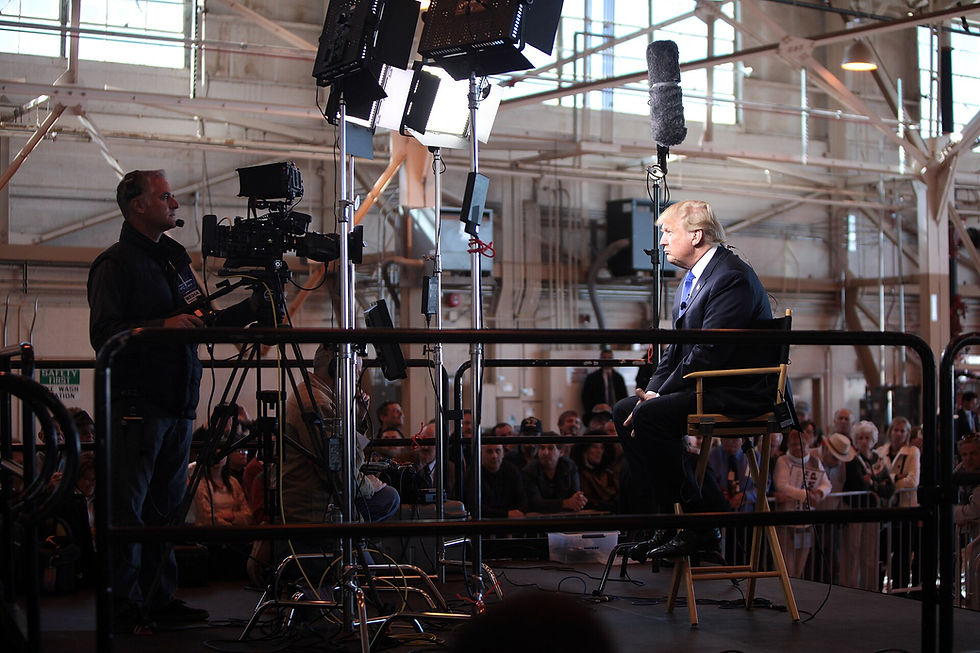
Neuroscientist Christian Jarret argues that Donald Trump’s ‘Make America Great Again’ campaign both appeals both to those who lived through the hardships of US urban de-industrialisation in the ‘80s and ‘90s, as well as younger people who reminisce over a 20th century society that they were never part of. Jarret expresses further concerns over the potential exploitation of anemoia and nostalgia by populist movements.
The argument that the economic/social conditions of the 20th century were superior to today is not necessarily nostalgic. However, nostalgia, in alignment with populism, is far more a concept of identity than objective fact.
Psychologist Adam Stanaland notes an unusual increase in the number of male Gen Z voters who voted red in the 2024 US election. Stanaland attributes this rise to Trump’s promotion of a doctrine of ‘hegemonic masculinity’, in conjunction with his typical xenophobia. These sentiments combine to form a populist, chauvinistic ideology, providing young, working class men with an aesthetic identity denigrating specific ingroups to identify with (the white, diligent, ironworker from Detroit), and specific outgroups to blame (the immigrants Trump erroneously blames for America’s economic problems, among other minorities).
The vision of industrial mid-20th century America to which MAGA alludes operates in aesthetic harmony with the movement’s ideology. The era/place is economically independent, militarily strong, and viperous to threat; all characteristics assumed by ‘hegemonic masculinity’. Trump’s movement relies on nostalgia, but this is where the barrier between anemoia and nostalgia fails.
Nostalgia is a specific, idiosyncratic feeling, often explored through synaesthesia; highly personal. It seems antithetical therefore that such a feeling could be engaged collectively. MAGA’s collective vision of industrial mid-20th century America is constructed unreality – it forgets the mistakes of rampant neo-colonial interventionism, it forgets the civil oppression of minorities. It is therefore no surprise that Trump has repeated each of these actions during his 2nd term, having ‘forgotten’ their mal outcomes. MAGA’s ‘nostalgic’ ideology is more about forgetting than remembering. MAGA’s ‘nostalgia’ is anemoia.
In his 1936 essay, ‘The Work of Art in the Age of Mechanical Reproduction’, Walter Benjamin addresses the contemporaneous rise of fascism, and the fascism’s capacity to galvanise the masses. Benjamin asserts:
‘[f]ascism attempts to organize the newly created proletarian masses without affecting the property structure which the masses strive to eliminate. Fascism sees its salvation in giving these masses not their right, but instead a chance to express themselves… The logical result of Fascism is the introduction of aesthetics into political life.’
In the US, property relations continue to polarise. As the middle class bifurcates, the US working class continues to grow; fewer have access to quality healthcare, education, and infrastructure. As De Birgard argues, anemoia is exacerbated by situational dissatisfaction. By offering a tangible, hegemonic MAGA identity signified by ‘nostalgic’ aesthetics, Trump is allowing the working class to express ‘themselves’, promising a solution to their economic problems without changing the property relations between the public and private spheres. If anything, Trump is antagonising working class property relations, by greatly reducing the size of the public healthcare sector and welfare funding.
By winning two administrations, Trump, among many right-wing populist leaders, has proven anemoia as the key ideological vehicle of right-wing populism. In conjunction with collective situational dissatisfaction, the promotion of a collective, hegemonic, yet constructed ‘identity’ sees the young become nostalgic for a time before their own, and the old become nostalgic for a time that was never theirs.
With the aestheticization of modern politics, one must beware of ‘nostalgia’, and the causal oppression ‘identity’ can create.
Image: Flickr/Don Sniegowski
No image changes made.


Comments